 Image 1 of 1
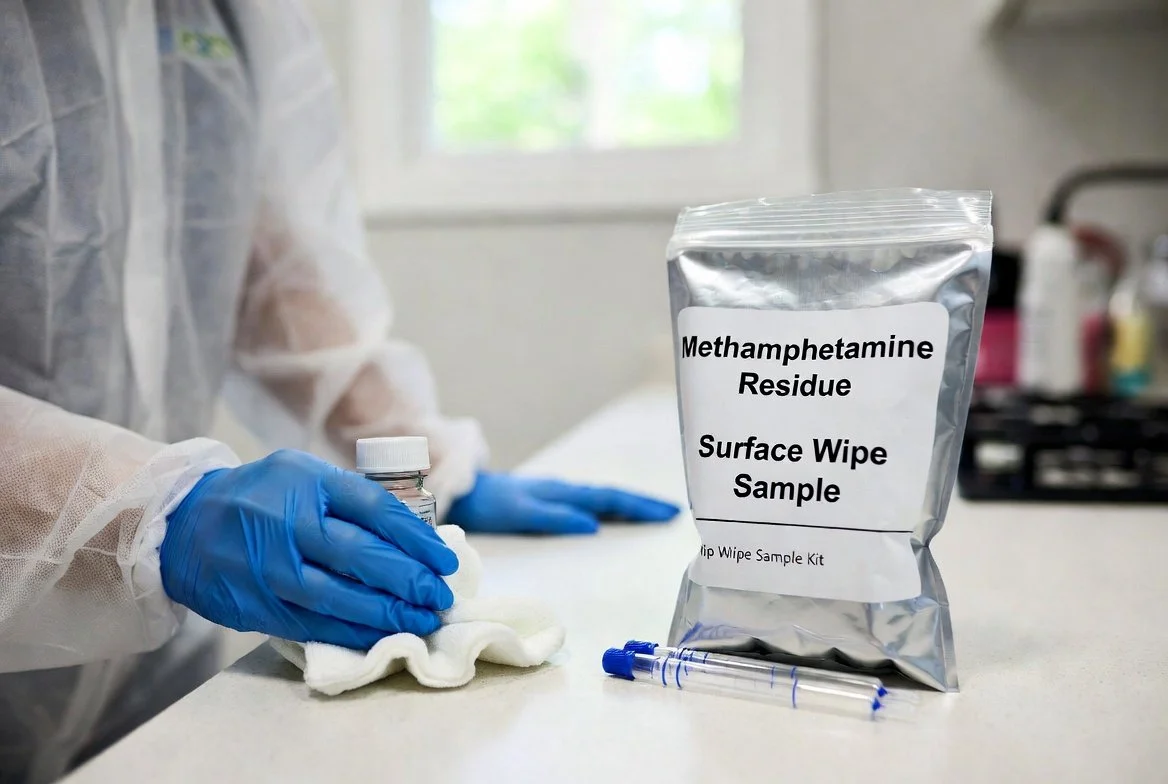
Methamphetamine, commonly called meth, is a powerful, highly addictive stimulant that affects the central nervous system and is often produced in makeshift labs using volatile, toxic chemicals; even after the drug is removed, vapors and particulate residue settle on walls, floors, furniture, HVAC systems, and porous surfaces, posing ongoing health risks such as respiratory irritation, headaches, nausea, neurological effects, and elevated risk to children and pets who have greater exposure relative to body weight. Meth residue can include not only the parent drug but also corrosive solvents, heavy metals, and byproducts that continue to off-gas or transfer by touch, so surface contamination can persist for months or years. Professional testing for meth contamination typically begins with a visual inspection and history of suspected use, followed by standardized surface wipe sampling collected from high-contact and representative areas; samples are analyzed in accredited laboratories using sensitive techniques such as gas chromatography–mass spectrometry (GC-MS) or liquid chromatography–mass spectrometry (LC-MS) to quantify methamphetamine and related residues against regulatory or guidance limits.
Methamphetamine, commonly called meth, is a powerful, highly addictive stimulant that affects the central nervous system and is often produced in makeshift labs using volatile, toxic chemicals; even after the drug is removed, vapors and particulate residue settle on walls, floors, furniture, HVAC systems, and porous surfaces, posing ongoing health risks such as respiratory irritation, headaches, nausea, neurological effects, and elevated risk to children and pets who have greater exposure relative to body weight. Meth residue can include not only the parent drug but also corrosive solvents, heavy metals, and byproducts that continue to off-gas or transfer by touch, so surface contamination can persist for months or years. Professional testing for meth contamination typically begins with a visual inspection and history of suspected use, followed by standardized surface wipe sampling collected from high-contact and representative areas; samples are analyzed in accredited laboratories using sensitive techniques such as gas chromatography–mass spectrometry (GC-MS) or liquid chromatography–mass spectrometry (LC-MS) to quantify methamphetamine and related residues against regulatory or guidance limits.